Real Estate Photo Editing Rules in Georgia: What's Allowed

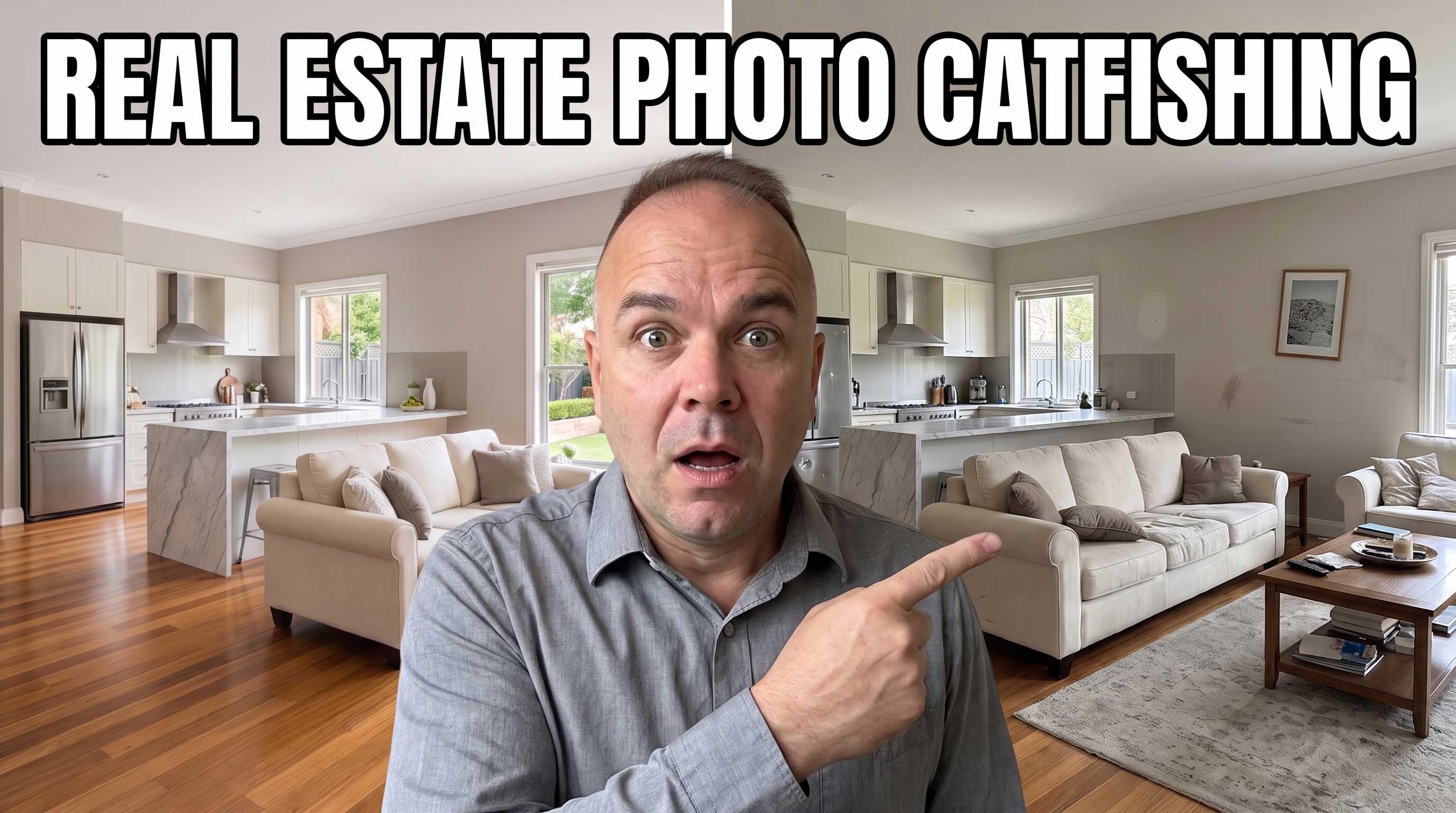
Buyers are falling for listings online, then falling out of love the moment they walk through the door. Real estate agents are calling it "catfishing," when a home's photos promise something the property doesn't deliver. It's becoming enough of a problem that California now requires disclosure on digitally altered listing photos, with Wisconsin following in 2027. Georgia has no law like it, but FMLS already has its own rules on altered photos, and breaking them can cost an agent real money. For agents and homeowners trying to market a property honestly, the real question isn't whether to edit photos. It's where enhancement ends and misrepresentation begins.
Real Estate Photo Catfishing is a Problem
According to NAR's 2025 Profile of Home Staging, about half of real estate agents say their buyers now expect homes to look staged like they're on TV. At the same time, 81% of buyers say listing photos are the most important factor when evaluating a property, per NAR research. That combination, sky-high expectations plus photos carrying more weight than ever, is exactly what makes over-edited images so damaging when reality doesn't match. Buyers who feel misled don't just walk away disappointed, agents report they often walk away distrustful of the listing and the agent behind it.
What Actually Counts as "Digitally Altered"
California's new disclosure law draws a genuinely useful line, one worth understanding even outside California. It requires disclosure when a photo edit adds, removes, or changes:
- Fixtures, furniture, appliances, flooring, walls, or paint color
- Landscaping, hardscape, or the home's facade
- Floor plans
- Outside elements visible from the property, including neighboring buildings, streetlights, or utility poles
It does not require disclosure for lighting, sharpening, white balance, color correction, cropping, exposure, or other common photo editing adjustments that don't change what the property actually is.
That's a genuinely useful test for any agent or photographer, in any state: correcting how a room is lit is editing. Adding a feature that isn't there, or removing one that is, is a different category entirely.
Where Agents Choice Media Already Draws This Line
This isn't a new standard we're adopting because of new laws, it's the standard already built into how every Agents Choice Media shoot is edited.
Standard HDR editing (included on every shoot, no upcharge) covers exactly the category California's law exempts: blue sky replacement, green grass enhancement, and TV screen replacement are lighting and color corrections, not changes to what the property is. The words "HDR photo editing" in this paragraph should link to: HDR photo editing
Virtual staging is offered as its own clearly named, separately priced add-on, not disguised as a real furnished room. An agent ordering it knows exactly what they're getting, and it's never presented as an unedited photo of the property as it exists.
The Signature Perspective™ editing standard, our approach to editorial marketing photography, states this directly: AI can assist with cleanup, masking, and distraction removal, but it should never invent significant property features. No adding fireplaces. No replacing countertops. No changing fixtures. No creating landscaping that doesn't exist. If generative editing would materially change how a property is represented, it doesn't get delivered as an authentic photograph, full stop.
What FMLS Requires of Atlanta Agents
Georgia has no state law like California's, but agents who list through FMLS already have written rules. According to the FMLS Rules and Regulations (effective March 17, 2025):
- Rule 3.3: photos "shall not be altered or enhanced in any way that might misrepresent the property."
- Rule 20.1(e): staged photos are allowed as long as they aren't deceptive. All staged images must be designated as staged in the public remarks. Staged photos can add furniture and similar personal property, but they cannot remove things outside the owner's control, such as neighboring buildings, power lines, or utility poles.
- Fines: a violation of FMLS rules can be fined up to $15,000.
Why This Protects Agents, Not Just Buyers
NAR's Code of Ethics already requires this. Article 2 tells members to "refrain from exaggerating, misrepresenting, or concealing pertinent facts." Article 12 requires a "true picture" in advertising. Jennifer Lindsley, the Wisconsin REALTOR® Association's director of legal services, put it simply: "Virtual staging is fine, so long as buyers know it's virtual."
That's not just an ethics rule, it's practical self-protection. A buyer who shows up to a listing that doesn't match its photos doesn't just lose trust in the house, they lose trust in the agent who marketed it. And a seller whose home was over-edited online often ends up with a lower offer than an honestly presented listing would have earned, because the buyer's expectations were set somewhere the house could never actually meet.
Working With a Team That Already Gets This Right
Every Agents Choice Media shoot is backed by $2M in general liability and $2M in aircraft liability insurance, and by an editing standard built to represent a property accurately, not just impressively. That's the difference between a photographer who makes a listing look good and one who makes it look like something it isn't.
Frequently Asked Questions
Related Reading
Want photos that look great and still match the house? Get an instant quote for your next listing.
Get an Instant Quote